
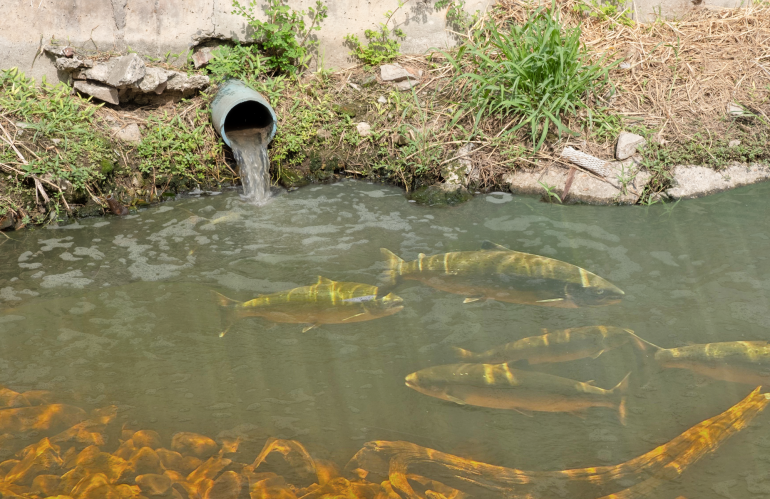
It’s well known that urbanization causes water quality and habitat degradation. While NPDES MS4 Stormwater permit programs haven’t succeeded in eliminating pollution carried by stormwater to our rivers and ocean, the big picture is that stream biological health has been roughly stable despite increased urbanization and population pressures — a real achievement given the ongoing challenge of stormwater program funding.
That’s good news considering the complexity of managing non-point source pollution within large, urban watersheds. The municipalities that work to meet the requirements of the stormwater permit deserve to be commended for their efforts, but those efforts don’t come cheaply.
The Cost of Compliance
The City of Salinas (pop ~160,000) reported operational costs to implement the permit averaged $6,456,765 per year over five fiscal years (2013-2018), equal to roughly $40 per capita or $159 per household and there is no reimbursement from state or federal governments for any program requirements.
Legal Roadblocks to State and Local Funding
There is an ‘unfunded mandate’ law in CA, which is intended to prevent the State from shifting responsibility to local governments without providing funding. It states that whenever “any state agency mandates a new program or higher level of service on any local government, the state shall provide a subvention of funds to reimburse that local government for the costs of the program or increased level of service. So why aren’t these costly programs being subsidized, at least in part, by the State?
CA has so far avoided funding stormwater programs by pointing out the NPDES MS4 permit is part of the Federal Clean Water Act and therefore not a State mandate, but since CA went much farther than the Federal mandate, that is still being contested in the courts.
Furthermore, local governments wanting to create or raise a stormwater fee generally need to go through Prop 218’s notice-and-protest process, and in most cases get majority voter or property-owner approval, which is a major practical obstacle to funding MS4 compliance.
The Case for State-Funded Structural Controls
As we wait for the latest unfunded provision to the permit to be fully adopted: achieving 100 percent trash control, now would be the perfect time for the State to provide funding for structural stormwater control measures, such as catch basins and filtration chambers.
These structures are very effective at trapping trash, sediment, and other pollutants of concern, but are costly to implement, so many agencies have opted for cheaper, less effective capture options.
Widespread implementation of strategically-placed, well-maintained structural capture devices together with the continued work of agencies to educate the public, could move the needle from merely holding steady to making a measurable difference in stormwater pollution reduction. It just requires money.
Municipalities have kept stream health stable despite decades of urban growth—a real achievement given the complexity and cost of stormwater compliance. Salinas alone spends over $6.4 million annually (roughly $159 per household) with zero state or federal reimbursement, even as California’s own unfunded mandate law suggests it should help foot the bill. With Prop 218 making local fee increases an uphill battle, and a costly new trash-control mandate looming, the timing is right for the State to step up and fund the structural controls—catch basins, filtration chambers—that could finally move stormwater outcomes from “holding steady” to genuinely improving.