

After decades of the public footing the bill for treatment and storage of waste from industry, or shipping waste overseas, California has been placing a big bet on a familiar policy tool over the past few decades: the Producer Responsibility Organization (PRO). Instead of building large new state-run programs from scratch to regulate and resource waste management, the state is requiring producers to band together through a PRO to finance, plan, and operate compliance systems under CalRecycle’s oversight. Two major new extended producer responsibility (EPR) laws are driving this shift:
- SB 54 (packaging and plastic food service ware)
- SB 707 (apparel and textiles)
The shared design choice is simple: make producers responsible, but make implementation collective, efficient, and expedient.
Four Conditions for EPR Success
- Fee design that drives redesign: incentives such as reduced fees for companies that redesign products for recyclability or reuse.
- Transparent oversight and auditing: CalRecycle must continue engaging local implementers throughout implementation.
- Infrastructure alignment: haulers, composters, and recyclers must be adequately supported.
- On-the-ground outreach and compliance support: implementation ecosystems matter as much as regulations. Local ordinances will still be necessary: local sustainability and solid waste departments will still need local ordinances for highly effective mandates to eliminate waste like required reusable foodware for dine-in.
What Is SB 54?

SB 54 is a landmark law that shifts focus from waste management to waste elimination at the design and production stage. Historically, California’s waste laws placed the burden on local governments, often through unfunded mandates, to recycle and compost. SB 54 shifts responsibility upstream, requiring producers to design packaging and plastic foodware that meet recyclability or compostability standards and to finance systems to manage those materials.
This law aims to eliminate the burden on public infrastructure and landfills from packaging waste that businesses have long externalized. High-volume food and beverage chains represent a significant share of disposable packaging waste, much of it ending up in stormwater outflows and ocean gyres. If successful, SB 54 will internalize these costs so that producers have a natural incentive to minimize waste and pollution in both waterways and landfills.
What Is SB 707?
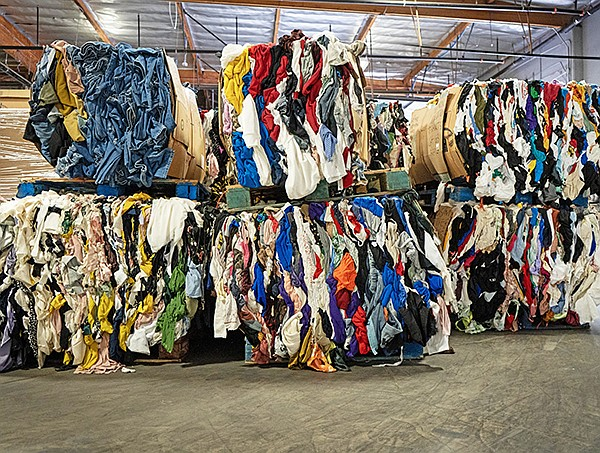
SB 707; the Responsible Textile Recovery Act of 2024, aims to dramatically reduce the amount of clothing and textiles ending up in landfills. In California alone, roughly 1.2 million tons of textiles were landfilled in 2021, about 3% of total waste. Not captured in these figures is the enormous volume of textile waste exported overseas: an estimated 225,000 tons per year shipped to Ghana, with up to 30% landfilled or illegally dumped there.
SB 707 makes companies that manufacture, brand, import, or sell apparel and textiles financially and operationally responsible for end-of-life management — including repair, reuse, collection, recycling, and safe disposal. It is one of the first statewide textile EPR frameworks in the U.S.
What Is a PRO, and Why Does California Keep Reaching for It?
A PRO is an industry-run, industry-funded organization designated to carry out producer obligations at scale: collecting fees, building programs, contracting with recyclers and sorters, running education and reporting systems, and submitting plans and budgets for government review.
California’s theory is that PROs can do three things government often struggles to do quickly:
- Stand up infrastructure faster than a state agency can build it.
- Aggregate responsibility so thousands of brands and importers comply through one coordinated system.
- Internalize costs so taxpayers and local governments aren’t left holding the bag.
PROs have worked before for paint (PaintCare), mattresses (Mattress Recycling Council), and pharmaceutical waste (Med-Project). California’s e-waste program dating back to 2003, by contrast, is state-run, requires permanent staffing, and moves at the speed of government. PROs offer a faster, more economical path.
But the model raises a central question: does delegating implementation to industry make EPR stronger, or does it make it easier for industry to work around the laws?
SB 54: Already in Motion
CalRecycle approved the Circular Action Alliance (CAA) as the first PRO for SB 54 implementation. Notably, regulations have been stalled for over a year in the legislature — yet the PRO is moving forward because compliance deadlines for industry have not changed. That the PRO is advancing while the state stalls is itself an illustration of one key advantage of the PRO model: industry can begin building implementation systems while regulatory details are still being finalized. However, it is expected that the final regulations surrounding SB54 will be approved by May 1, 2026.
The SB 54 PRO is broadly expected to coordinate producer participation, develop and fund a statewide program plan aligned to statutory targets, support end-of-life material management, and report performance to the state.
SB 707: On a Tight Clock
SB 707 required CalRecycle to review and approve a PRO by March 1, 2026. The Textile Renewal Alliance is among those preparing to serve in that capacity. The SB 707 PRO is envisioned as a statewide operator responsible for building collection and takeback systems, reuse and repair pathways, recycling market development, consumer education, and measurement and reporting against targets.
Why PROs Could Make These Laws Stronger
A PRO is a practical way to manage compliance across California’s massive covered producer universe — potentially tens of thousands of businesses — without creating tens of thousands of individual compliance pathways. A single statewide PRO can sign long-term contracts and make aggregated investments, like upgrading sorting capacity or funding reuse pilots, without waiting for each city and county to act independently. The strongest PRO-based systems combine industry operation with hard government oversight: plan approval, auditing, transparent reporting, and meaningful penalties.
Why PROs Could Weaken These Laws
Industry capture is the primary risk. A PRO paid for and governed by producers may face pressure to set fees too low to fund real system change, prefer cheaper end-of-life pathways over waste prevention, or design programs that look good on paper but underperform in practice.
Transparency is another concern. Communities, local governments, and recyclers need visibility into fee setting, contracting decisions, regional investments, and whether equity goals are being met. Without it, opposition grows — even if the program is technically functioning.
Enforcement gaps are perhaps the most critical vulnerability. PROs have not been tasked with on-the-ground enforcement. It is one thing to design compliance systems; it is another to police what businesses purchase or where they send their waste. EPR laws shift financial responsibility upstream, but financial responsibility alone does not guarantee environmental outcomes. Boots on the ground remain essential.
Real-World Gaps to Watch
For SB 54, compostable foodware illustrates the infrastructure alignment problem. Many restaurants have already switched to compostable packaging under local ordinances but early signals from compost facility operators suggest that high volumes of compostable material, combined with contamination, may exceed processing capacity in some regions. A restaurant may be in compliance with SB 54 while its compostable packaging still ends up in a landfill.
Similarly, “recyclable” plastic foodware is complicated in practice. Once heavily contaminated with food, plastic is often impractical to recycle. Even under optimistic assumptions, plastic recycling rates in California are well below 15–20%. If PROs promote recyclable and compostable solutions without corresponding infrastructure investment, success is unlikely.
The implementation of SB54 may imply that local municipal ordinances surrounding packaging may no longer be needed. However, the regulations that truly eliminate waste, like requiring reusable foodware for dine-in at food facilities, will still need to be mandated locally. This last one is truly a no-brainer. It saves the food facility money while eliminating large volumes of solid waste from the landfill.
For SB 707, setting up textile collection systems without investing in design for reusability or domestic processing capacity risks simply relocating waste from local landfills to foreign ones, unmonitored and ungoverned.
What Success Requires
For these laws to deliver real environmental outcomes, several factors are make-or-break:
- Plan approval with teeth: CalRecycle must be willing to reject weak plans, not merely review them.
- Independent verification: strong auditing, data validation, and public reporting.
- Enforcement that reaches noncompliers: penalties and market access restrictions with real consequences, supported by local presence.
- Local government alignment: cities and counties need predictable funding and workable systems. Local ordinances and outreach will still be needed.
- Equity-by-design — investments cannot concentrate only where it is cheapest. Outreach and enforcement in only urban and affluent areas perpetuates pollution in rural, low-income, and underserved communities.
The Bottom Line
California is using PROs not as a side feature, but as the core operating model for two major EPR laws. The approach can make the laws stronger but only if CalRecycle’s oversight, transparency requirements, and enforcement mechanisms are strong enough to ensure PROs deliver outcomes, not just administration.
Without sustained outreach, technical assistance, and local enforcement, even well-designed systems risk falling short. Compostable packaging may still be landfilled if infrastructure is lacking, and textile collection programs may simply shift waste elsewhere without strong oversight.
For SB 54 and SB 707 to succeed, California will need more than PROs and regulations; it will require local boots-on-the-ground implementation to turn policy goals into real environmental outcomes.
Sources: CalRecycle; Time Magazine: “The Race to Upcycle Africa’s Fast Fashion Dumping Ground”; Retail Insights Network: “Retail and Apparel Giants Back California Textile Waste Plan”; Packaging Dive: “CAA readies California EPR program plan without finalized rules or needs assessment”; Daily Journal: “CalRecycle reboots SB54 rulemaking to tackle plastic waste”